Conveyor Monitor – Wave-Solder Transport Monitoring with Computer Vision
Technician capstone: a Raspberry Pi with OpenCV watching the solder-frame transport on a SEHO 8140 wave-soldering line
Project Overview
WEPTECH's SEHO 8140 wave-soldering line solders lithium cells. After an incident with a jammed solder frame inside the 260 °C wave zone, the operation needed live monitoring of the transport directly above the wave — a region where conventional light barriers run into heat and geometry limits. Conveyor Monitor is a self-contained unit built from a Raspberry Pi, CSI camera, and custom PCB. It processes the video stream in real time with OpenCV, watches grey-value change rates inside an operator-defined region of interest against a configurable threshold, and signals every stoppage to the existing machine controller over GPIO in under a second.
Education Context
Capstone project of my state-certified electronics technician qualification (specialization: digitalization & information technology) at Berufsbildende Schule Suedliche Weinstrasse. Built February to May 2023 on-site at WEPTECH Landau, 58 working days, documented end-to-end as a LaTeX thesis.
Stack
PythonOpenCVNumPygpiozeroRaspberry Pi 4B / Zero 2WRPi Camera V2.1 (IMX219)KiCadFreeCADsystemdV4L2C++ (planned port)CMakenlohmann/json
Image-Processing Pipeline
Camera frames are cropped to an operator-defined region of interest, converted to grayscale, and denoised with a median blur. The change rate of pixel grey values between consecutive frames is compared against a threshold; that decision drives the stoppage signal. A live GUI keeps every parameter — ROI, sensitivity, threshold curves — adjustable on top of the running camera feed without interrupting the process.
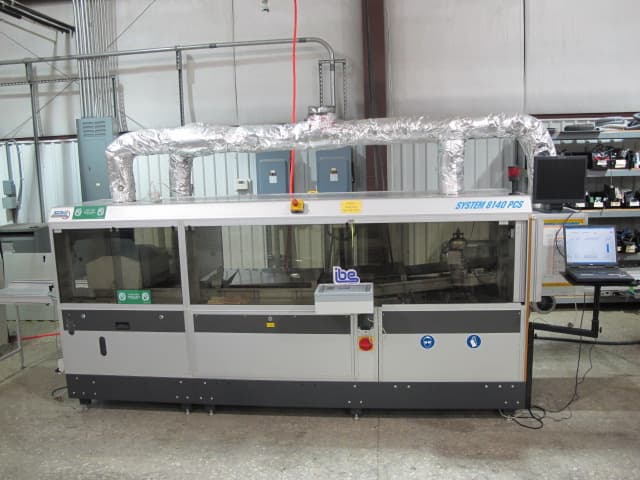
The SEHO 8140 wave-soldering line — the machine being monitored at WEPTECH Landau.
Simulator Prototype
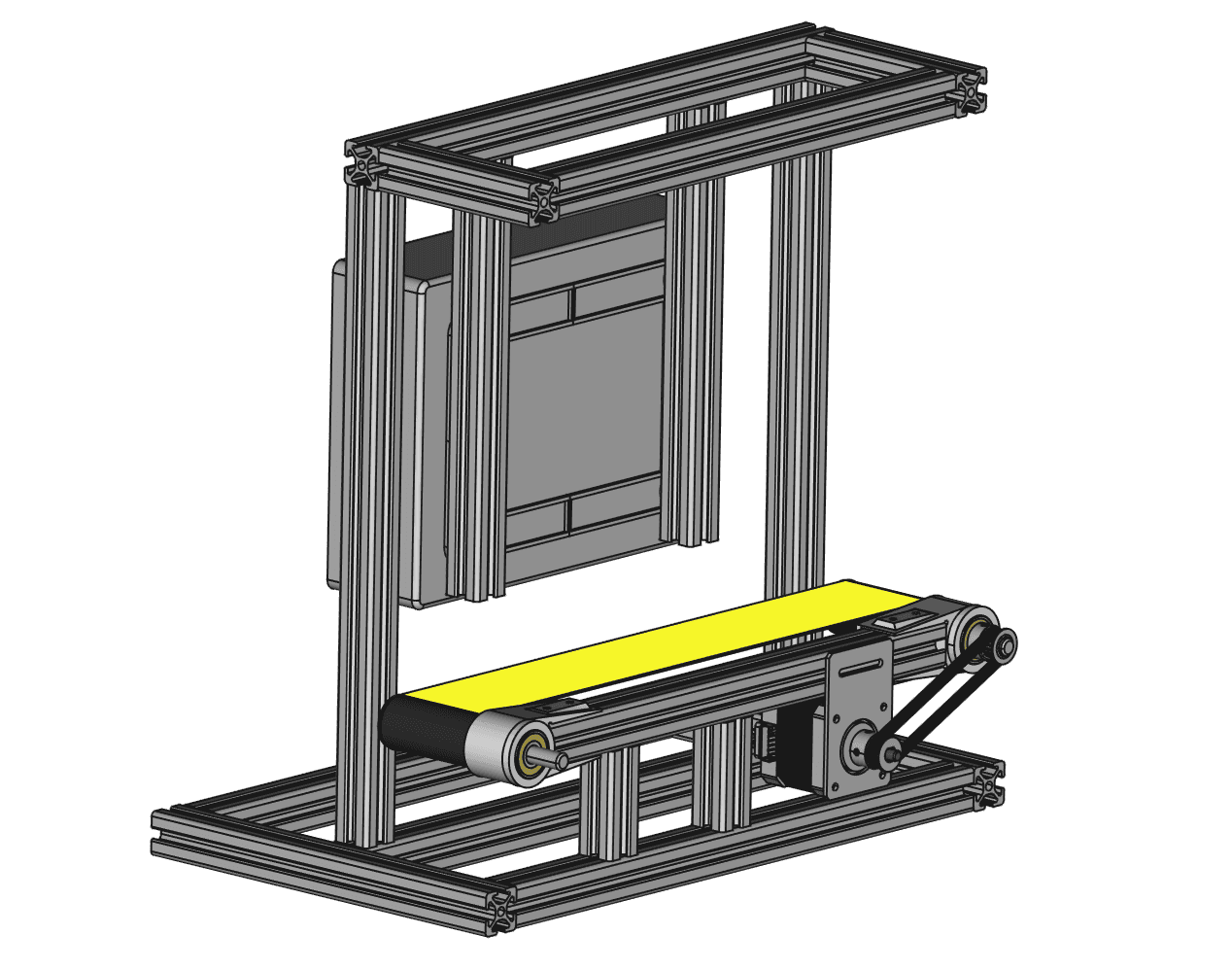
To verify the unit outside the running wave-soldering line, I designed a simulator rig in FreeCAD built from 20 × 20 mm Type-I aluminium extrusions. A surface-mount distribution enclosure holds a Siemens LOGO controller with its power supply, two signal lamps, and a four-pin M8 sensor socket. Under the camera mounting surface, a NEMA 17 stepper drives a GT2 belt onto a 10 cm steel shaft running in 608RS ball bearings, with a 3D-printed conveyor support on top — a repeatable belt motion to validate ROI selection, threshold tuning, and error signaling end-to-end.
Thermal Tests on the Simulator Hour-long thermal runs on the simulator, in a 20 °C-controlled environment, verified the compute unit's heat budget. Without active cooling the Raspberry Pi Zero 2W settles at around 70 °C — just below the 80 °C throttling threshold, but dangerously close once ambient temperatures near the wave-solder line rise above 50 °C. Active compressed-air cooling through a Festo pressure regulator and shut-off valve drops the CPU temperature well below the throttling threshold and validates the design for the production environment.
FreeCAD model of the simulator rig built from 20 × 20 mm Type-I aluminium extrusions.
Key Features
Real-time image processing with configurable region of interest and threshold detection.
Sub-one-second stoppage signal to the machine controller after detection.
Live-configurable GUI with camera-feed overlay for parameter tuning during operation.
JSON-based configuration and systemd auto-start as a headless Linux service.
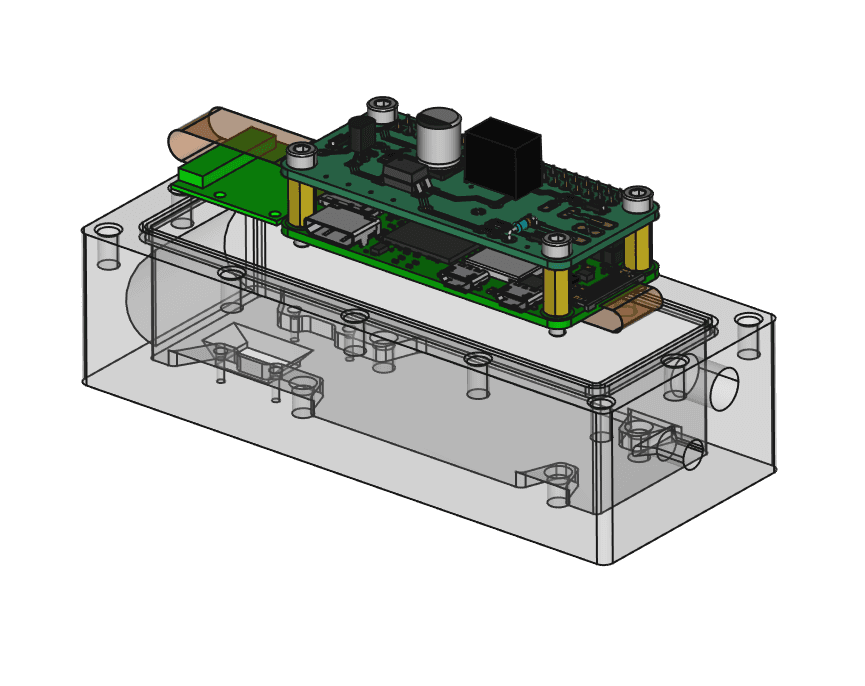
Custom KiCad PCB with GPIO error signaling and a print-iterated FreeCAD enclosure.
Planned C++ port (CMake, nlohmann/json) for the Raspberry Pi Zero 2W production target.
Hardware & Enclosure
The compute unit is a Raspberry Pi (4B in development, Zero 2W as the production target) with the Camera Module V2.1 over CSI. The bare sensor is blinded by the radiant heaters; an installed IR filter restores visibility into the process. The error line runs over GPIO into the existing Siemens LOGO controller. A custom KiCad PCB (own schematic and layout) and a 3D-printed FreeCAD enclosure iterated through real prints complete the build.